
Friday, October 23, 2026

Monday, October 19, 2026
MY REVIEW OF GUAM'S MOST POPULAR COFFEE SHOPS
By Tim Rohr
The following was published as a Letter to the Editor in the Guam Pacific Daily News on Oct. 15, 2026. It was also published on my Substack.
+++++

Having been in business for 40 years, with most of those years in sales, coffee shops, like for most people in my profession (especially if they are self-employed as I am), are our second offices.
We meet clients there, meet business partners there, transact business there, grab wi-fi there, and even drink coffee there.
So, over the years, I’ve been in a lot of them. I’ve even done business with some back in the day, when one of my companies was a distributor of food-service cleaning supplies.
I’ve seen several coffee shops come and go, and I’ve learned to spot “the signs” of decline.
Today, given my daily routine, I frequent three coffee shops, each with multiple locations. I won’t name them for now. I’ll just call them Coffee 1, Coffee 2, and Coffee 3.
Coffee 1 is the oldest of the three. Their product is always good. Their atmosphere is very “coffee,” meaning “pleasant.” Their locations are good. However, I give them about a year before I think we will see them downsizing, and maybe closing altogether. I’ll explain in a minute.
Coffee 2 is the newest. It’s Asian, very modern, with amazing attention to detail and ambiance. They appear to be part of a large Asian chain, so they will be around a while.
Coffee 3 is neither new nor old. Of the three, they are doing it right. Their product and coffee ambiance aren’t any better or worse than the other two; however, they pay attention to something the other two don’t: the people behind the counter.
Coffee 1’s people behind the counter are dressed in everyday clothes, even “home clothes” looking. And other than taking your order, they don’t engage the customer. They are more interested in carrying on conversations (in their own language) with the other employee(s).
Coffee 2’s people are similarly unengaged but dress better. There appears to be a uniform, even if it’s only an apron. But at least there is some attempt to look like they’re on the job and didn’t just roll out of bed.
Coffee 3’s staff are dressed in coffee-shop-appropriate attire. I would say that it’s a uniform. More importantly, they are very engaged with the clientele. They look at you, smile at you, and say your name. Plus, they’re hustling. They don’t act like you’re interrupting them when you walk up to the counter.
Standing straight, moving quickly, smiling, engaging the customer in conversation. If they keep that up, they’re going to be around for a while.
My only recommendation is to address the bathroom key issue at one of their locations. The key is tied to a large, heavy piece of coffee equipment. I don’t know what it’s called. It’s a thing with a handle. And a zip tie is used to attach the key. The zip tie has a sharp edge where it was snipped, and it scratches your hand if you’re not careful when you try to use the key to open the bathroom door. Plus, you need two hands free to open the door because the coffee thing the key is tied to is so heavy.
Oh, and the wi-fi at that location is hardly ever stable. Other than that, I’m a supporter and customer, not because their coffee is better, but because their people are.
Thursday, October 15, 2026
WE STILL NEED TO STAND UP
By Tim Rohr

As I write this book (Orchestrated: How a blog and the laity brought down an archbishop and exposed the largest clergy sex abuse scandal in the whole Catholic world), I came across the letter that started it all: Apuron's "resign or 'experience a more arduous and painful closure to your assignment'" letter to Fr. Paul Gofigan of July 16, 2013.
The book will be pretty much about how things grew from this letter, to Apuron's conviction five years later, and the ultimate outing of the "largest sex abuse scandal in the whole Catholic world." So I thought I'd copy the letter here with a few comments later.
+++++
Dear Father Paul:
In virtue of my pastoral obligation to provide for the care of souls, it is my sad duty to ask that you submit immediately your resignation from the office of pastor of Santa Barbara Church in Dededo.
I have good reason to believe that there is a canonical cause for your removal, which can be demonstrated by certain evidence. You have allowed a registered sex offender, Mr. Joseph Lastimoza, to return to work at the parish, even after you were warned by the Vicar General and the Attorney for the Archdiocese to release him. You disobeyed the order given by the Vicar General. By this action, you have in effect caused grave harm to the parish by allowing such an individual with a publicly known sex-offense record to work in the Church, thus exposing him to your parishioners, especially the youth. By allowing him to work in the parish, you have exposed the children of the nearby school to a probable threat. Your decision to allow Mr. Lastimoza to work at the parish created a lasting and potential threat to the safety and well-being of your parishioners and office staff. Such an action is gravely detrimental to the parish community and has rendered your ministry harmful. Therefore, by virtue of canons 1740 and 1741, 1 in which your action brought about a grave, lasting, and proven harm to the parish, I hereby demand your immediate resignation as pastor.
Your removal is necessary to guarantee that the care of souls is not compromised due to the grave harm caused by your decision to allow a registered sex offender to work there. Your removal from this office is a pastoral remedy in that the good of souls must take precedence as the supreme law in the Church. The good of the soul of Mr. Lastimoza needs to be addressed in a proper way. Allowing him to work for the parish is not the right method to address this need.
After my preliminary investigation and consultation with others, by this letter, I as your Archbishop and also as your brother priest, ask that you submit your resignation immediately.
If you do not submit your resignation immediately, you are charged to supply your reasons as soon as possible.
It is to your best interests and the good of the parish that I look in making this request. It is to your advantage to resign immediately, rather than experience a more arduous and painful closure to your assignment at Santa Barbara Church.
In addition to your resignation as pastor, I am also relieving you of your duties as Director of Vocations and Director of the Diaconate Formation Program.
What type of ministry you might take up in the future is open for discussion. And if it is your wish, I hereby release you from the Archdiocese to go and look for a benevolent bishop willing to accept you. This is effective immediately.
Thank you for your respectful consideration.
Servus tuus,
Most Rev. Anthony Sablan Apuron, OFM Cap., D.D.
Archbishop of Agana
Apuron, A. (2013, July 16). [Letter to Fr. Paul Gofigan.] Prot. No. 013-047. https://drive.google.com/file/d/0B5IW0Zxhdou0b3p0dmQ0V0o5ZGc/view?usp=sharing&resourcekey=0-FQZUmZh-dfESn3wA2BRs4Q
++++
It's amazing to read this again given what Apuron himself was eventually found guilty of by a Vatican Court, and even by the Pope himself, after Apuron appealed directly to him. The real story, however, is what might have happened - or not happened - if the laity had not stood up to Apuron and all the powerful people protecting him.
We still need to stand up.
Tuesday, October 13, 2026
THE POWER OF THE NEOCATS - ESPECIALLY IN ROME
By Tim Rohr
On October 9, 2026, EWTN News announced: "Cardinal Luis Antonio Tagle has been elected dean of the College of Cardinals, succeeding Italian Cardinal Giovanni Battista Re, who has held the position since 2020. The Filipino prelate is the first Asian to serve as dean."

This is no small promotion. Benedict 16 held the same position prior to becoming Benedict 16. The timing is interesting, given that we also just learned that Leo 14 will undergo surgery in the next day or two.
The surgery is reportedly minor, and there is little chance that Leo won't survive it, but if he doesn't, then:
The Dean plays a prominent public and liturgical role:
Summons all cardinals to Rome.
Presides over the General Congregations of cardinals.
Celebrates the funeral Mass for the deceased pope and presides over the opening of the Conclave (unless he is over the age limit of 80, in which case the senior cardinal elector takes over).
Meanwhile, closer to home, I believe the elevation of Tagle will lead to Archbishop Jimenez taking a position in Rome. Jimenez already has one, having been appointed to serve on the Vatican’s Dicastery for Communication; however, I believe Jimenez's new job will take him physically and permanently to Rome - where, of course, I believe he has always planned to be.
For Jimenez, the appointment to Guam was always a stepping stone, and, as I've pointed out several times, his main job was to salvage the Neocatechumenal Way. And, if he did that, he'd soon find himself in Rome.
Meanwhile, I also believe the plan all along was to move Convocar to Saipan, but only temporarily, and that after Jimenez moved to Rome, Convocar would return to Guam as the new archbishop.
The only thing that doesn't quite add up is that Tagle is not a friend of the Neocats - at least he wasn't several years ago- so I don't know how Jimenez track record of taking care of the Neocats in Guam adds up to a promotion under Tagle.
However, never discount the power of the Neocats. Especially in Rome.
Friday, October 9, 2026
SOMEONE TELL JIMENEZ
By Tim Rohr
A comment on the following:

While Guam does have particularly shameful laws that invite "Divorce Tourism," per court records, divorce tourism is rare.
Go to GuamCourt.gov > Superior Court > Decisions and Orders, and search for cases that start with DM. You will see mostly local names. The few non-local names are usually military.
There is little to no "divorce tourism" going on. The divorce rate in Guam - "among the highest per-capita...in the world" is mostly local - and thus, mostly Catholic.
Someone tell Jimenez
AND WHILE THEY'RE AT IT
By Tim Rohr

And while they're at it (this meeting in the Vatican to reflect on Amoris Laetitia, I will just post the Church's teaching on Divorce - since you are not going to hear this from any of them. (Emphases added)
2382 The Lord Jesus insisted on the original intention of the Creator who willed that marriage be indissoluble.173 He abrogates the accommodations that had slipped into the old Law.174 Between the baptized, "a ratified and consummated marriage cannot be dissolved by any human power or for any reason other than death."175
2383 The separation of spouses while maintaining the marriage bond can be legitimate in certain cases provided for by canon law.176 If civil divorce remains the only possible way of ensuring certain legal rights, the care of the children, or the protection of inheritance, it can be tolerated and does not constitute a moral offense.
2384 Divorce is a grave offense against the natural law. It claims to break the contract, to which the spouses freely consented, to live with each other till death. Divorce does injury to the covenant of salvation, of which sacramental marriage is the sign. Contracting a new union, even if it is recognized by civil law, adds to the gravity of the rupture: the remarried spouse is then in a situation of public and permanent adultery:
If a husband, separated from his wife, approaches another woman, he is an adulterer because he makes that woman commit adultery, and the woman who lives with him is an adulteress, because she has drawn another's husband to herself.177
2385 Divorce is immoral also because it introduces disorder into the family and into society. This disorder brings grave harm to the deserted spouse, to children traumatized by the separation of their parents and often torn between them, and because of its contagious effect which makes it truly a plague on society.
2386 It can happen that one of the spouses is the innocent victim of a divorce decreed by civil law; this spouse therefore has not contravened the moral law. There is a considerable difference between a spouse who has sincerely tried to be faithful to the sacrament of marriage and is unjustly abandoned, and one who through his (or her) own grave fault destroys a canonically valid marriage.178
AS THE CHURCH GOES, SO GOES THE WORLD
By Tim Rohr

So the Pope and bishops are (once again) trying to figure out how to stop the bleeding in marriage and families.
It's ironic that the focus for their current figure-it-out session is to "reflect" on the previous pope's "teaching" on the matter, Amoris Laetitia, a "teaching" which, in my opinion (and the opinion of many others), undermines marriage and the family, something our church leaders have been actually doing for decades, beginning with Pope John 23's creation of a Vatican Frankenstein, the Papal Commission on Birth Control (1961).
I call it a Frankenstein because the Commission grew into something neither John nor his successor (Paul 6) ever imagined: a Commission that voted overwhelmingly to permit married couples to contracept, forcing Paul to pen Humanae Vitae in the middle of the night to kill the beast he (and John) created.
By the time the Holy Spirit showed up, slapped Paul around his room, and put a pen in his hand, the horses had already left the barn. And today, Catholics (in the West, anyway) contracept, abort, and divorce at the same rate as the rest of the society they live in.
Prior to the Commission's conclusion in 1968, Paul had been hinting that the Church's position on contraception - as a grave moral evil - could be changed and probably would be.
In 1964, upon expanding the Commission from the original 6 members (which included only Catholic prelates) to 72 (which included lay people), Paul said (emphases added):
"We say frankly that so far we do not have sufficient reason to consider the norms given by Pope Pius XII on this matter [of contraception] as out of date and therefore as not binding. They must be considered as valid, at least until We feel obliged in conscience to change them." - Paul VI Acta apostolicae sedis (AAS) 56 (1964) 588-59, 1964 address to the special papal commission on the use of contraceptives.
When a Pope uses "We," as he does here, he is not expressing a personal opinion. He is speaking magisterially. He also refers to the Church's teaching on contraception as a "norm," as if it is a discipline and not an unchangeable doctrine - which it is.
True, Paul tried to fix it with Humanae Vitae, but too late. John 23 had opened the door by establishing a commission to look into a moral matter that could never be changed, and Paul, upon radically expanding and prolonging the term of the commission, speaking with a papal "We," had let the world know that the teaching could change if "We feel obliged in conscience to change them."
The Pope's "shindig" at the Vatican (with Jimenez in attendance) is going to go down the usual road, trotting out the usual bogeymen: economic and social pressures, blah, blah, blah. In short: blaming "the world - in fact, blaming everything and everyone but themselves.
They'll come up with another document, like all the other ones. And other than some new stuff added to the already useless offices of marriage and family, nothing will be done. Nothing.
As the Church goes, so goes the World. But don't expect our Church leaders to admit that. Nevertheless, don't despair. Christ is not sleeping.
By the way, here is what the Catechism of the Catholic Church OFFICIALLY teaches on the matter:
2370 ... "every action which, whether in anticipation of the conjugal act, or in its accomplishment, or in the development of its natural consequences, proposes, whether as an end or as a means, to render procreation impossible" is intrinsically evil.
Thursday, October 8, 2026
BTW
By Tim Rohr
BTW, the Vatican.va article about the event Archbishop Jimenez is currently attending begins with the following:
"On the first day of the meeting dedicated to the 10th anniversary of Amoris laetitia, Sr. Helen Alford calls for ways to encourage young people to embrace the “great challenge” of family life."
Sr. Helen shared an interesting take on Jesus' conversation with the woman at the well, suggesting that Jesus was flirting with the woman.
She described the initial approach, in a “somewhat provocative” way, as a “flirting”: a man and a woman are speaking alone, and their exchange remains ambiguous until Jesus confronts her with the truth: “Go and call your husband . . . and come back here.”
Yeah, that should be a great encouragement to young people to embrace family life.
Thanks, Sister.
FUNNY (NOT)
By Tim Rohr
Archbishop Jimenez is currently in Rome (again) participating in an event titled "Amoris laetitia: Rediscovering the Gospel through challenges facing families."


Meanwhile, back at home:


KIKO'S GLOBAL SHELL GAME: THE MAGIC TRICK OF THE HEADLESS CLERGY
By Rodney
(Responding to "JUST CURIOUS")
The Magic Trick of the "Headless" Clergy: Kiko’s Global Shell Game

Ah, the miraculous reappearance of Fr. Harold in Hagat! It’s truly a marvel of the modern NeoCat age. One day they vanish into the ether without a trace, and a year later, poof—they magically drop back into a parish administrator slot. No aviso, no explanation, just another round of the Neocatechumenal Way’s favorite board game: Where in the World is Kiko’s Presbyter?
But let’s be honest, we shouldn't be surprised. This isn't just about Harold; this is the NCW’s patented loophole to revive a practice the Catholic Church has spent the last 1,500 years trying to destroy: the Vagrant Clergy.
For centuries, the Holy See has absolutely despised clerici vagantes or acephali (literally, "headless" clergy). They saw the danger of wandering, unaccountable priests centuries ago. Just look at the history:
- The Council of Chalcedon (451 AD) declared that any "absolute ordination" (ordaining a guy without tying him to a specific local church) was null and void.
- The Council of Valencia (524 AD) threatened these wandering clerics with excommunication and penalized anyone who gave them shelter.
- The Council of Trent cracked down hard, ruling that nobody gets ordained unless a specific diocese actually needs them.
- The 1917 Code of Canon Law (Canon 111) formally declared that vagrant clerics are "not at all recognized."
- And today, Canon 265 of the 1983 Code explicitly states that "unattached or transient clerics are not allowed at all."
The Church’s message has been clear for a millennium and a half: Priests belong to a Bishop, and they stay put.
But the master deceivers of the Way found a brilliant cheat code. Enter the NeoCat Bishops—or as they are more accurately known in the real world: Kiko’s Puppets.
These puppet bishops technically "incardinate" the NCW priests on paper to satisfy Canon 265 and keep Rome off their backs. But the ink is barely dry before they hand the leash straight to Kiko Argüello and his handlers. From that moment on, these priests are effectively vagrant. They are treated like disposable toys, shipped across the globe at the whims and fancies of Kiko's itinerary, completely abandoning the spiritual and physical welfare of the men they ordained.
And canonical procedure? Please. When a normal priest moves to a new diocese, there is a formal, documented exchange of a scripto (commendatory letters) between the ordaining bishop and the receiving bishop. But in the NeoCat travel agency, who needs a scripto when you have a guitar, a black trash bag, and Kiko's nod? They are just dumped into a new jurisdiction to do the Way's bidding, completely hoodwinking the spirit of ecclesiastical law.
Of course, this global shell game serves a much darker purpose than just spreading the "Way." It is the perfect system for dodging accountability. When a presbyter becomes a liability—whether by protecting arch-abusers like Apuron, or becoming a rogue abuser themselves—they don't face legal consequences. They get the "Harold Treatment." They vanish.
The NCW bishops simply shuffle these abusive or disgraced clerics to some far-flung corner of the globe to protect the "pristine" reputation of the Way.. Rogue priest like Camacho are hidden away until he can be hidden no more, with some even turning up dead under highly mysterious circumstances. It's not a pastoral assignment; it's a witness protection program for clerics.
So welcome back, Harold! We don't know where you were hidden, and your Puppet Bishop probably doesn't know either. But hey, as long as Kiko is happy, who cares about 1,500 years of Canon Law?
JUST CURIOUS
By Tim Rohr
Recently, someone asked me about the status of Fr. Harold (Colorado Prieto, Rev. Fr. Harold). I suppose I was asked because I live in Hagat, where Harold was assigned in 2024.
I don't attend Mass in Hagat, mostly because I can't get out of my mind how Harold and his Neocat defenders fought tooth and nail to protect Arch-child-molester Apuron.
More than any other Neocat "presbyter," Harold was one of "those." "Tony's toys," as one elderly local Catholic called them.
The elderly man said it in such a way, and with a quiet smile, that it was quite apparent that the metaphor was not new, that Tony and his "toys" was something long known, with the Noecat presbyters, and specifically, Harold, just being the latest in a long line of such "toys."
Of course, the discovery of those "toys" would eventually drive this archdiocese into bankruptcy, but what did Harold and his "bro's" care? Their communities with their "black trash bags" would take care of them.
Sometime in mid 2025, Harold disappeared. There was no aviso. Around the same time, his Neocat bro, Krzysztof Szafarski, also disappeared. However, there was, correctly, an aviso:
AVISO - NEW PASTORAL ASSIGNMENTS - Effective September 14, 2025
On Study Leave: Fr. Krzysztof Szafarski
On Study Leave: Fr. Krzysztof Szafarski
But no such aviso for Harold. For several months, the diocesan website simply said "priest off-island" next to his name. The website stated this as recently as August 30, 2026, when I posted about it.
So, at least according to the diocesan website, Harold was gone for about a year.
And then suddenly, he's back.
Colorado Prieto, Rev. Fr. Harold
Parochial Administrator - Our Lady of Mount Carmel, Hagat
No aviso, no announcement, no nothing.
Apparently, like with Apuron, Harold's movements, now under Jimenez, are not to be known. Just curious. That's all.
Sunday, October 4, 2026
DUMB DOGS THAT CANNOT BARK
By Tim Rohr

From today's Office of Readings. A lesson from the Sixth Century.
From the Pastoral Guide by Saint Gregory the Great, pope
A spiritual guide should be silent when discretion requires and speak when words are of service. Otherwise he may say what he should not or be silent when he should speak. Indiscreet speech may lead men into error and an imprudent silence may leave in error those who could have been taught. Pastors who lack foresight hesitate to say openly what is right because they fear losing the favor of men. As the voice of truth tells us, such leaders are not zealous pastors who protect their flocks, rather they are like mercenaries who flee by taking refuge in silence when the wolf appears.
The Lord reproaches them through the prophet: They are dumb dogs that cannot bark. On another occasion he complains: You did not advance against the foe or set up a wall in front of the house of Israel, so that you might stand fast in battle on the day of the Lord. To advance against the foe involves a bold resistance to the powers of this world in defense of the flock. To stand fast in battle on the day of the Lord means to oppose the wicked enemy out of love for what is right.
When a pastor has been afraid to assert what is right, has he not turned his back and fled by remaining silent? Whereas if he intervenes on behalf of the flock, he sets up a wall against the enemy in front of the house of Israel. Therefore, the Lord again says to his unfaithful people: Your prophets saw false and foolish visions and did not point out your wickedness, that you might repent of your sins. The name of the prophet is sometimes given in the sacred writings to teachers who both declare the present to be fleeting and reveal what is to come. The word of God accuses them of seeing false visions because they are afraid to reproach men for their faults and thereby lull the evildoer with an empty promise of safety. Because they fear reproach, they keep silent and fail to point out the sinner’s wrongdoing.
The word of reproach is a key that unlocks a door, because reproach reveals a fault of which the evildoer is himself often unaware. That is why Paul says of the bishop: He must be able to encourage men in sound doctrine and refute those who oppose it. For the same reason God tells us through Malachi: The lips of the priest are to preserve knowledge, and men shall look to him for the law, for he is the messenger of the Lord of hosts. Finally, that is also the reason why the Lord warns us through Isaiah: Cry out and be not still; raise your voice in a trumpet call.
Anyone ordained a priest undertakes the task of preaching, so that with a loud cry he may go on ahead of the terrible judge who follows. If, then, a priest does not know how to preach, what kind of cry can such a dumb herald utter? It was to bring this home that the Holy Spirit descended in the form of tongues on the first pastors, for he causes those whom he has filled, to speak out spontaneously.
Saturday, October 3, 2026
THAT TIME WHEN APURON GAVE THE INVOCATION AT THE U.S. HOUSE OF REPRESENTATIVES
By Tim Rohr
At the invitation of Rep. Madeline Bordallo, (D-GU), then Archbishop of Agana, Anthony Sablan Apuron, gave the opening prayer to a meeting of the U.S. House of Representatives on Nov. 12, 2003.
Most Reverend Anthony Sablan Apuron
Archbishop of Agana
Agana, GU
Sponsor: Rep. Rep. Madeline Bordallo, (D-GU)
Date of Prayer: 11/12/2003
One Minute Speech Given in Recognition of the Guest Chaplain:
Mrs. BORDALLO. Mr. Speaker, it is my honor and privilege to welcome the Most Reverend Anthony Sablan Apuron, OFM Cap, DD, Metropolitan Archbishop of Agana to the People's House and to thank him for offering today's prayer.
Archbishop Apuron has served God and His people first as priest and now bishop for over 31 years. Born November 1, 1945, he was ordained a priest in the Order of Friars Minor Capuchin on August 26, 1972. He was appointed Auxiliary Bishop of Agana by the late Archbishop Felixberto C. Flores on December 8, 1983 and consecrated Titular Bishop of Muzuca on February 19, 1984. On May 11, 1986, (1) the Most Reverend Anthony S. Apuron was elevated to Metropolitan Archbishop of Agana.
As the head of the Roman Catholic Archdiocese of Agana, he is the spiritual leader for over 350,000 Roman Catholics in Guam, the Diocese of Chalan Kanoa in the Northern Mariana Islands, and the Diocese of the Caroline and the Marshall Islands. He has been the moral voice for the faithful who look to him for direction in these difficult times. (2) Under his leadership, the Archdiocese of Agana has expanded its ministries to meet the changing needs of the community.
On behalf of the people of Guam, I want to thank Archbishop Apuron for being with us today and for his leadership and guidance of the people of Metropolitan Archdiocese of Agana. Si Yu'os Ma'ase.
Opening Prayer Given by the Guest Chaplain:
The Most Reverend Anthony Sablan Apuron, Archbishop of Agana, Guam, offered the following prayer:
Almighty God, whose goodness fills our hearts with joy. You are blessed for bringing us together to work in harmony, in peace, and in justice. Send Your blessings upon our United States House of Representatives, who generously devote themselves to the work of our Nation and Territories in the laws they pass and the resolutions they create.
In times of difficulty and need, grant them the strength to transcend personal interests and seek after the common good for all. Strengthen them with Your grace and wisdom so that everything that they begin with Your inspiration, continue with Your guidance and by You be happily ended. Grace us with Your saving presence and aid us with Your constant blessing.
All glory and praise be to You, our ever–living God, forever and ever. Amen.
(1) May 11, 1986. I always thought it coincidental that Apuron was elevated to Archbishop on the very day and date my wife and I married.
(2) A moral voice? Madeleine had to know. Everybody did.
Thursday, October 1, 2026
AMERICAN JUSTICE FOUNDATION: MAKE AMERICA WISE AGAIN
By Tim Rohr
This may seem like a different sort of issue for regular readers; however, it isn't. Empowering ordinary people to do extraordinary things is what JW has been about from the beginning. And, as the record shows, that is exactly what we - through this blog, through the posts, through your comments - have done. Amazing accomplishments.
However, in addition to our passion and our activism, knowledge was needed, particularly knowledge of the law, of lawful procedures, both canon and civil, and ultimately, knowledge of how to use that knowledge to bring about justice as well as rein in those who deny it. In the past, we benefited greatly from the late, great Bob Klitzkie, whose knowledge of all of the above kept us on course as we battled impossible odds.
I mean, just think of it! We got the Vatican, in fact, the Pope himself, to remove an archbishop; we exposed decades of horrific clergy sex abuse; we brought justice to hundreds (that we know of) who, as children, were molested, mutilated, and otherwise ruined by perverse abusers; and we got enacted into law legislation to bring about that justice and deter similar abusive terror going forward. And let's not forget that we are the only place in the world that has shut down an RMS.
All of the above resulted from knowledge and passion working together for a just cause. In the same vein, I am using this post to promote an organization known as the AMERICAN JUSTICE FOUNDATION. The founder is an attorney, Dr. Frederick Graves, whose course HOW TO WIN IN COURT WITHOUT A LAWYER literally saved me from what was on course to be a major life disaster - a story I will tell another time. (See graphic in the sidebar: No Lawyer No Problem)
I am copying here the AMERICAN JUSTICE FOUNDATION's "manifesto." If any of it strikes a chord with you, go to the HOME PAGE and JOIN.
America's motto "We Trust In God" has nothing to do with "religion".
God is the Reality that decides the destiny of men and nations.
We Americans have rights because they are God-given.
We were born with them.
This is the First and Primary Principle of American Justice.
To deny this is insanity.
For government to deny this is tyranny!
America's government exists to protect your God-given rights.
Our rights are not "permissions" granted by judges or politicians.
American Justice Foundation® wants you to fight for your rights,
so we teach you and your children the common-sense Rules of
Court that give you power to fight peaceably to restore God in
government ... our only guarantee of Liberty and Justice for ALL!
"MAKE AMERICA WISE AGAIN !"
Wednesday, September 30, 2026

Wednesday, September 23, 2026
THE PSYCHOLOGICAL MEAT GRINDER OF NEOCATECHUMENAL WAY PRIESTLY FORMATION
By Rodney
In response to LUIS CAMACHO: "IF...I MESS UP..."

Ever wonder what happens when you combine amateur lay-psychotherapy, public trauma-dumping, and a massive identity crisis, and then hand the survivor a Roman collar? Welcome to the psychological meat grinder of Neocatechumenal Way priestly formation.
During their seminary years, NCW candidates are subjected to "scrutinies"—essentially a spiritual strip-search where lay catechists happily trample right over Canon Law’s strict protection of the internal forum. Candidates are conditioned through public confessions, emotional coercion, and a total surrender of personal boundaries. By the time they are ordained, their psychological autonomy hasn't just been stunted; it's been dismantled and replaced with absolute subservience to Kiko’s itinerary.
Then comes the real mind-bender: the cognitive dissonance. Once assigned to a parish, these men are forced to play a high-stakes game of ecclesiastical Jekyll and Hyde. Upstairs in the main church, they must cosplay as orthodox diocesan priests, dutifully nodding to Canon Law and the Catechism. But downstairs in the parish basement on Saturday nights, the mask comes off. They revert to being Kiko’s enforcers, presiding over a parallel church with its own proprietary theology, bizarre liturgical aesthetics, and unquestioned loyalty to the movement's founders.
You cannot force a human psyche to endure years of coercive emotional surveillance and then demand they live a permanent double life without the mental wheels coming off. This massive, unbridgeable gap between the official Church teachings they studied and the sectarian reality of their daily ministry exacts a severe, fracturing toll on their mental health.
You are ultimately left with emotionally compromised, psychologically fractured men wielding immense spiritual authority, shielded by a powerful internal lobby ready to sweep their inevitable psychological unraveling under the rug. Therefore, NCW priests are a danger to the parishioners and even to the NCW families themselves.
Sunday, September 20, 2026
BECAUSE THE MONSTERS ARE STILL HERE
By Tim Rohr
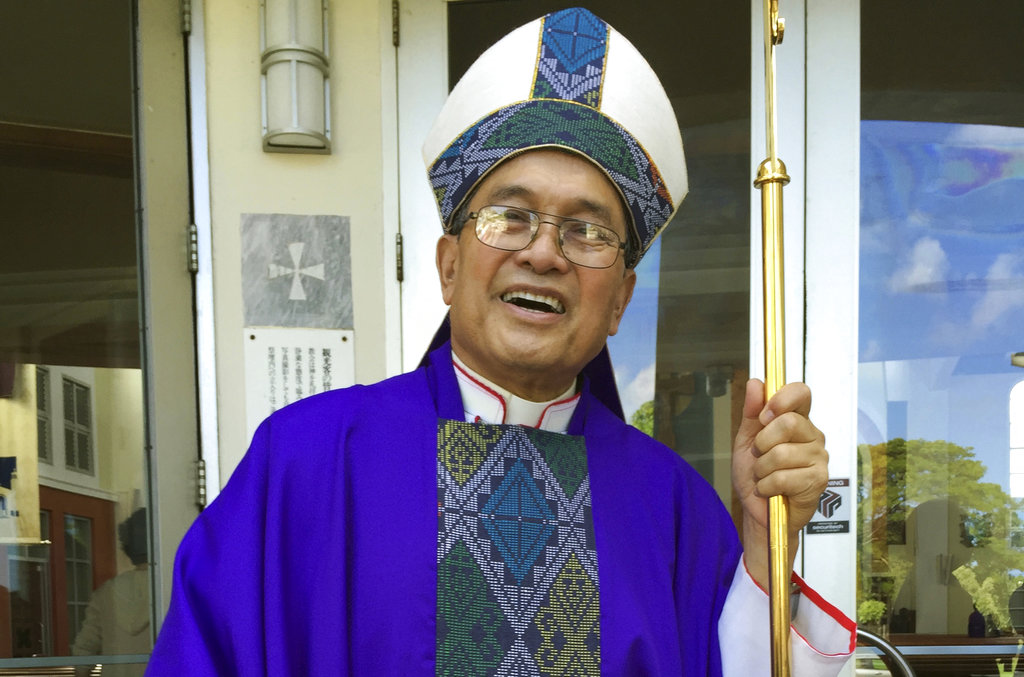
Just a note.
In writing this book about the disaster that has been the Archdiocese of Agana, I am coming across long-forgotten (or missed) documents that bring home just how terrible things were and still are in this archdiocese: the Catholic Church of Guam.
If there was a picture of hell on earth - this is it: the Catholic Church in Guam for the last 50 years, or more.
The real question for us - for those of us who care - is how this happened...and what to do next - to save our souls, the souls of our children, and our church.
Writing this book is absolutely frightening - because the monsters are still here.
LUIS CAMACHO: "IF...I MESS UP..."
By Tim Rohr

The above is from a November 2013 Umatuna article that records the thoughts of newly ordained Luis Camacho "during the prostration" at his ordination on November 9, 2013.
What Camacho prayed for "during the prostration" is odd, but his reporting it to the Umatuna reporter is even more odd.
As Camacho lay on the floor at the Cathedral-Basilica before Archbishop Apuron and (probably) many other clerics, Camacho was thinking, "If in my priesthood I mess up..."
Camacho's thought, as recorded in the Umatuna, comported with what I was told by an informant: that Apuron (compromised as he was) knew that the two men he ordained that day (Camacho and Jucutan) were not men he could ordain in good conscience.
He did anyway - because he was ordered to by the Neocat generals who controlled him. And Camacho's own thoughts, upon his ordination, indicate that the one thing on Camacho's mind was that he was going to mess up - an indication that even Camacho knew that he did not have a genuine vocation to the priesthood.
Less than two years later, in fact only 16 months after ordination, March 17, 2015, Camacho messed up: he was arrested by Guam police after being caught with a minor girl, alone in a car, parked at a deserted Agat beach.
We won't get into what he was doing with the girl at the time he was caught and arrested. We don't need to. The fact is that, at the time, Camacho was the pastor of two parishes - Merizo and Umatac - and he was found alone with a 17-year-old schoolgirl in a car at a deserted beach during a time the girl was supposed to be in school.
I have always believed that had Camacho simply said, "I am sorry, I messed up, please forgive me," that he would not have had to be on the run for the better part of these last ten years, nor would he have to be in his current situation: having to appeal a Vatican verdict of "delicta graviora and dismissed from the clerical state."
In fact, saying "I am sorry, I messed up, please forgive me" was exactly what Camacho prayed he would say if he ever "messed up."
I prayed...that if in my priesthood I mess up, that I may be able to have the sincerity, the willingness to bring it to the light."
I have also always believed that this is what Camacho very much wanted to do, but because he was a Neocat, and not just a Neocat, but also Apuron's first local product of RMS, the Neocat machine sprang into action and has been hustling Camacho around the world for the last ten years - to the terrible detriment of Fr. Luis Camacho. (See the FILE.)
What they, the Neocats, did to Fr. Luis Camacho is probably our best example of how Neocats sacrifice and destroy anyone and everyone who is a problem to Kiko's heretical agenda - even their own priests.
Just remember. Luis Camacho, at the exact moment he was being ordained a priest, prayed:
"...if in my priesthood I mess up, that I may be able to have the sincerity, the willingness to bring it to the light."
Apuron and the Neocats NEVER gave him that opportunity. Ten years later, Camacho has that opportunity. Who is still controlling him?
THE LUIS CAMACHO FILE
By Tim Rohr

One of the issues that we suspect Archbishop Jimenez will want to quietly disappear is the case of NEOCAT Fr. (?) Luis Camacho.
On Dec. 11, 2025, Archbishop Jimenez announced that Camacho "was found guilty of delicta graviora and dismissed from the clerical state."
Four days later, on Dec. 15, 2025, Jimenez announced that "Camacho was exercising his right to appeal to the Vatican within 60 days, meaning he was not yet permanently laicized pending appeal."
True, the Vatican moves slowly; however, Jimenez still owes us an update on the matter, even if there is none.
Following is JW's full Luis Camacho file - in case Jimenez is missing anything.
+++++
2013-FLC\_Luis Camacho-Ordination01.png
**Content**: Contains personal reflections from Fr. Luis Camacho during his ordination ceremony, including his prayer for sincerity to bring any future mistakes to light.
An announcement by the Archdiocese of Agaña regarding the live broadcast of the ordination of Luis Camacho and Michael Jucutan on Nov 9, 2013.
2015.03.18-FLC\_A\_Martinez to Apuron.pdf
A formal complaint sent by Deacon Stephen Martinez on Mar 18, 2015, to Archbishop Anthony Apuron and Child Protective Services (CPS) detailing allegations that Fr. Luis Camacho transported a 17-year-old minor without permission and engaged in sexual contact with her at a beach in Agat.
2015.03.17-FLC_POLICE BLOTTER.JPG
The documents contain a police blotter entry from Mar 17, 2015, detailing criminal incidents reported in locations including Yigo, Tamuning, and Agat. Recorded offenses include criminal trespass, fraudulent use of license plates, theft of property, burglary, and custodial interference. The entries note responding officers, reporting
2015.03.17-FLC_PoliceBlotter.pdf
The documents provide a police activity blotter for Mar 17, 2015. The records detail various incidents across multiple locations, including traffic accidents, thefts, harassment, burglary, criminal trespass, and disturbances. Each entry includes incident numbers, specific locations, involved personnel, and reporting officers.
2015.03.18-FLC_AOA Statement Luis Camacho.pdf
An official press statement from the Archdiocese of Agaña announcing that Archbishop Apuron accepted the resignation of Fr. Luis Camacho following his arrest for custodial interference.
2015.03.18-FLC\_Pacific Daily News - Timeline.pdf
A social media capture of a Pacific Daily News article and public comments regarding the arrest and resignation of Fr. Luis Camacho.
2015.03.18-FLC\_Pastor Arrested for Taking Minor without Consent.pdf
A news report from Pacific News Center detailing Fr. Luis Camacho's arrest on Mar 17, 2015, for custodial interference after being found with a 17-year-old in a car at an Agat beach.
2015.03.18-FLC-A_Martinez to Apuron.pdf
The documents include a Mar 18, 2015 report from Deacon Stephen Martinez to the Archdiocese of Agaña and Child Protective Services. It details allegations of sexual misconduct against Fr. Luis Camacho involving a minor on Mar 17, 2015, citing violations of archdiocesan policy and local laws, noting that the Guam Police Department arrested the priest.
2015.03.18-FLC-B_Martinez to Apuron - fr luis camacho-follow up.pdf
The documents contain a letter dated Mar 18, 2015, from Deacon Stephen Martinez to Archbishop Anthony Apuron. It addresses concerns regarding a pattern of sexual misconduct among Neocatechumenal Way (NCW) clergy and seminarians in the Archdiocese of Agana. Martinez urges the Archbishop to implement thorough psychological screenings and background checks to address these issues and protect the faithful from potential abusers.
An Associated Press article published by West Hawaii Today reporting on Fr. Luis Camacho's arrest and immediate resignation as pastor on Guam.
2015.03.19-FLC\_Marianas Variety - Guam police find priest with 17- year-old girl.pdf
A news article and public commentary from Marianas Variety detailing the arrest of 29-year-old Rev. Luis Camacho for custodial interference and his background.
2015.03.19-FLC\_Neocat Priest Luis Camacho caught at beach in car...pdf
A blog post summarizing the incident involving Fr. Luis Camacho and the 17-year-old girl at an Agat beach.
2015.03.22-FLC\_UMATUNA-Archdiocese of Agana statement concerning Fr.pdf
A publication of the official archdiocesan statement in *Umatuna Si Yu'os* confirming Fr. Camacho's resignation and restricted faculties.
A report covering Deacon Stephen Martinez's complaint alleging sexual contact between Fr. Luis Camacho and the 17-year-old minor.
2015.03.25-FLC\_Marianas Variety - Arrested priest may have had sexual contact with teen girl.pdf
An article discussing Deacon Stephen Martinez's obligation under archdiocesan policy to report the alleged sexual misconduct to civil and church authorities.
A Pacific News Center article archived on BishopAccountability.org regarding Deacon Martinez's formal report of sexual contact involving Fr. Camacho.
An article describing local divisions within the Catholic community on Guam following Fr. Camacho's arrest and a prayer vigil held for unity.
2015.04.02-FLC\_Luis Camacho - FOIA.pdf
The text document of Timothy J. Rohr's formal FOIA demand sent on Apr 2, 2015, to Guam Police Chief Fred Bordallo.
2015.04.09-FLC\_Luis Camacho - FOIA-2nd Letter.pdf
A follow-up request sent by Timothy J. Rohr on Apr 9, 2015, noting the expiration of the 4-day statutory response window for his initial FOIA demand.
2015.04.13-FLC\_Luis-Camacho\_Police\_FOIA.pdf
The complete two-page response letter from Police Chief Fred Bordallo denying Timothy Rohr's FOIA request because the case was pending with the Attorney General's Office.
2015.04.20-FLC\_BORDALLO EMAIL.pdf
An email sent by Tim Rohr to Chief Bordallo on Apr 20, 2015, expressing concern over delays in receiving the promised written response from the GPD Legal Section.

2016.03.04-FLC\_Luis celebrating Children's Mass.jpg
An image post showing Fr. Luis Camacho celebrating a Filipino Children's Mass at Our Lady of the Rosary Parish in Doha, Qatar, on Mar 4, 2016.
2016.04.07-FLC\_Chuck to Ballin.pdf
An email sent on Apr 7, 2016, by Charles White to Bishop Camillo Ballin informing him of Fr. Camacho's 2015 arrest and sexual misconduct allegations on Guam.
2016.04.08-FLC\_Ballin to Chuck.pdf
An email response from Bishop Camillo Ballin on Apr 8, 2016, to Charles White, defending his knowledge of Fr. Camacho's background and telling White to "be ashamed".
2016.04.11-FLC\_T.Untalan to Apuron\_Resign.pdf
A letter from Teri Untalan to Archbishop Apuron requesting his resignation due to his handling of Fr. Camacho's case and transferring him to Doha, Qatar.
A news article reporting on public outcry and Teri Untalan's letter after it was discovered Fr. Camacho was active in youth ministry in Qatar.
A statement from Chancellor Fr. Adrian Cristobal clarifying that Fr. Camacho remained under supervised ministry and psychological/spiritual evaluation while canonical proceedings continued.
An updated release of KUAM's coverage on the ongoing canonical investigation into Fr. Camacho.
2016.06.25-FLC\_Bishop Ballin's Report on Canonical Investigation.pdf
A pastoral letter issued by Bishop Camillo Ballin declaring that a Vatican inquiry concluded "there is not a semblance of truth" to allegations against Fr. Camacho and welcoming him back to the Vicariate.
2016.06.25-FLC\_Invoice to Ballin.pdf
A mock invoice sent by "Faithful Catholics of the Archdiocese of Agana" to Bishop Ballin regarding seminary costs, adding commentary about Fr. Camacho and Archbishop Apuron.
2024.05.07-FLC\_AOA News re Fr Luis Camacho May 7 2024 fin.pdf
An official archdiocesan statement announcing Fr. Camacho's return to Guam after nine years, noting that his faculties remain restricted while his case is reviewed.
2025.12.11-FLC\_Archbishop's Letter to Faithful on Luis Camacho, Dec 11 2025 PDF.pdf
A pastoral letter from Archbishop Ryan P. Jimenez stating that the Vatican’s Dicastery for the Doctrine of the Faith confirmed Fr. Camacho was found guilty of *delicta graviora* and dismissed from the clerical state.
2025.12.15-FLC\_Clarification re Rev L. Camacho.pdf
A follow-up statement from Archbishop Jimenez clarifying that Fr. Camacho was exercising his right to appeal to the Vatican within 60 days, meaning he was not yet permanently laicized pending appeal.
Thursday, September 17, 2026
HOW THE NEOCATS BUY BISHOPS
By Rodney
(From his comment on KIKO ARGUELLO'S (FAKE) HISTORY OF THE CATHOLIC CHURCH.)
+++++

Kiko Argüello claims he’s taking us back to the "roots" of the Early Church, but he dug so deep he struck a pipeline of pure heresy. Under the guise of historical renewal, he hasn't just distorted Church history; he's swapped the actual Catholic Catechism for his own theological fan-fiction. At its core is a blazing streak of Neo-Pelagianism—the arrogant idea of Kiko that salvation isn't a free gift of God’s grace, but, a prize you "earn" by relentlessly grinding through his exhausting, multi-decade endless series of "steps."
True Baptism unites us in humility with a broken humanity. The NCW’s version, however, functions like an exclusive spiritual country club, breeding an insufferable, cloistered self-righteousness.
When the root is this rotten, the whole tree is diseased. Just look at the toxic fruit they drop into parishes worldwide: parallel, sit-down dinner-party liturgies; bizarre public "scrutinies" that resemble psychological abuse sessions; and a Gnostic culture of absolute secrecy.
How does the Vatican's doctrinal watchdog (the DDF) remain blissfully blind to this parallel church? Just follow the money. The NCW famously passes the "trash bag" for massive tithes, ensuring generous cuts flow directly to Diocesan Bishops and compliant Cardinals. It turns out the greatest "miracle" of the Neocatechumenal Way isn't spiritual renewal—it’s the sudden, profound theological blindness that strikes a bishop when a heavy envelope lands on his desk.
RODNEY: "RETURN TO THE TRUE ORDO AMORIS"
By Rodney
(From his comment on THOSE TROUBLESOME LAY PEOPLE)

"The hierarchy stages "environmental liturgies" while remaining spectacularly blind to the moral rot in its own house." - Rodney
+++++
For centuries, the Catholic Church ran on St. Augustine’s logical blueprint: the Ordo Amoris (the order of love). At the top sat the Supernatural (God and salvation), next the Spiritual and then the Intellectual, down to the basement: the Material.
But keeping your eyes on heaven makes for terrible secular PR. When Paul VI issued Humanae Vitae in 1968 to uphold spiritual law, progressive bishops threw a continental tantrum. Today, that same hierarchy plays docile lapdog to the "Synodal Church," demanding blind obedience to endless, aggressively vague meetings.
Welcome to the Great Inversion—a masterclass in institutional hypocrisy where the lowest rung (the material) is now supreme dogma. The hierarchy stages "environmental liturgies" while remaining spectacularly blind to the moral rot in its own house. They spent decades ignoring horrific abuses in their seminaries, turning a comfortable blind eye from Fr. Maciel’s empire to problematic dynamics in the Neocatechumenal Way.
When it comes to the Mass, Orwellian doublespeak reaches peak performance. Rome rubber-stamps clown masses and liturgical free-for-alls, yet crashes the hammer on traditionalists desiring an ancient, reverent liturgy. Restricting the TLM is not "pastoral care"; it is the clinical suffocation of moral freedom.
To cap off the inversion, intellectual values have been entirely dynamited. Doctrinal clarity is replaced by weaponized ambiguity from Cardinal Fernández at the DDF—a man whose credentials include publishing notoriously explicit books before landing Christendom’s top doctrinal job.
Terrified of secular irrelevance, the modern Vatican bureaucracy sold out the salvation of souls for financial security and worldly survival. They flipped the ladder upside down and now wonder why everyone is falling off.
Thankfully, the laity are waking up. The lay people of Guam put their Post-Baptismal responsibilities into action. By successfully pushing out Vatican enforcers like Cardinal Filoni and Bishop Hon, Guam’s faithful forced the establishment to right-side the hierarchy of values. It is high time the rest of the Catholic world took notes. The global faithful must stop playing docile second fiddle to whatever fashionable nonsense rolls out of Rome and demand a return to the true Ordo Amoris.
Wednesday, September 16, 2026
A POINT OF FACT
By Tim Rohr
Today, I came across a copy of a letter from the law office of Cunliffe and Cook (signed by Atty. Jeffrey Cook) to Atty. David Lujan.
The letter, dated August 4, 2016, informs Atty. Lujan that Cunliffe and Cook have been retained as legal counsel "for the Archdiocese of Agana" in the matter of Roy T. Quintanilla et al. vs. Archbishop of Agana et al., Civil Action No.: CV0552-16.
Cunliffe and Cook argue that they represent only the Archdiocese of Agana, not Anthony Sablan Apuron.
As a point of fact, legally there is no such thing as the "Archdiocese of Agana." There is only "Roman Catholic Archbishop of Agana," which, of course, is a person, and that person is (was) Anthony Sablan Apuron.
The proper name is noted in the Guam District Court's docket:

This is also why the current archbishop should never permit any letter, notice, press release, circular, aviso, etc., to be printed, published, or sent with merely the words "Archdiocese of Agana" as the author, sender, whatever - something that is commonly done.
There is only "Roman Catholic Archbishop of Agana." And he has a name. Use it.
Tuesday, September 15, 2026
WHAT HAPPENED TO FILONI AND HON?
In the post THOSE TROUBLESOME LAY PEOPLE, I ended with the following:
P.S. Getting tangled up with "those troublesome lay people" in Agana was not good for either of their (Filoni and Hon) careers. Both were removed from Rome after the Apuron thing blew up.
Anonymous then left this comment:
Pretty sure that Pope Francis's removal of Filini (sic: Filoni) and Hon from the Congregation for the Evangelisation of Peoples had more to do with their objections to Pope Francis's secret deal with China.
The use of the "s" in the spelling of Evangelisation (rather than the "American" spelling with a "z") suggests the commenter is probably European and may even be personally familiar with the situation he references.
Filoni

In the case of Filoni, I would be inclined to agree with the commenter that the Pope's removal of Filoni from his position as Prefect of said Congregation was probably due more to his objections to Francis' China policy than to his role in the screw-up by Hon in Guam. The dates certainly reflect this:
Francis' China policy was signed September 22, 2018. Filoni was removed on December 8, 2019.
Hon
However, Hon was removed as Secretary of the same Congregation on September 28, 2017, one year before the China policy was signed. Hon had been an outspoken critic of the Chinese Patriotic Catholic Association, with whom Francis would later make a deal, since 2011. But the timing of Hon's removal points more to his screw-up in Guam. Here's why:
Hon served as the Apostolic Administrator of the Archdiocese of Agana, Guam, from June 6, 2016, until October 31, 2016. During that time, Hon incurred what is probably one of the largest black marks on his record a cleric of his stature could ever incur: through both his actions and inaction, Hon created the hostile environment that led to the legislation that opened the door to the bankruptcy of the Archdiocese of Agana.
While we'd like to think that clergy sex abuse and the covering it up - which is what Hon appeared to initially try to do - would be bigger black marks. Sadly, that's not the case. In fact, it was Apuron's mishandling of the RMS property, not the "mishandling" of altar boys, which initially caused the Vatican to take notice of what was going on in Guam.
Stupid islanders
How Public Law 33-187 became law and how Hon caused it to happen will probably be a very lengthy chapter in my upcoming book about the entire mess. But the bottom line is that Hon took us - as Attorney David Lujan said - for "stupid islanders."
It is obvious that Hon's policy is designed to have the confessor brainwash the victims into believing, as modern-day counselors would say, that it was the victims' fault that the pedophile molester abused them, and to deal with this matter in-house. Hon needs to awaken from his Rip Van Winkle sleep to see that things are not done this way in the 21st century; rather, the Defendant is hauled into court to face his accusers for the entire island to see and hear. Furthermore, please inform your Client we are not stupid islanders! - Atty. David Lujan letter to Atty. John Terlaje, July 14, 2016.
Hon's attitude set off a firestorm, and it might have remained nothing but a firestorm, but for a man named Bob Klitzkie. With the Concerned Catholics of Guam, Klitzkie responded to Hon's insult with a strategy that led to the formation of an organization named SILENT NO MORE, which led to the introduction of legislation (by Sen. Frank Blas, Jr.) to lift the civil statute of limitations on sex crimes against minors.
Blas' bill permitted civil suits against perpetrators, but not against the institutions for which those perpetrators worked or operated. After Hon "sniffed" at the bill, Klitzkie, a former lawmaker, pro tem judge, and attorney, flexed his lawmaking muscles and worked with key figures in the Guam Legislature to amend it to include institutional liability.
Hon panics
After two days of dramatic, tearful, horrific, and grueling public testimony, the bill passed the legislature unanimously. Hon panicked and tried to orchestrate a petition campaign at every Mass to stop then-Governor Calvo from signing it into law.
Hon's campaign didn't work, and three years later, after hundreds of lawsuits, the new Archbishop of Agana, Michael Byrnes, declared bankruptcy.
According to Wikipedia, the following happened after Hon returned to Rome:
- On 28 September 2017, Pope Francis named him Apostolic Nuncio to Greece,[12] his first position in the diplomatic service.
- On 24 October 2022, Pope Francis named him Apostolic Nuncio to Malta.
- On 18 May 2023, he was also named as nuncio to Libya.
- On 2 February 2026, Pope Leo XIV accepted his resignation upon reaching the age limit.
Interestingly, Filoni, upon being removed from leadership of the Congregation for the Evangelization of Peoples, was appointed Grand Master of the Order of the Holy Sepulcher.
I say "interestingly," because it is an Order of which I am a member, albeit not in good standing. In 2013, Filoni's predecessor threatened me to lay off Apuron. I threatened back and decided not to be active in an organization whose leader covered for sex criminals, and according to Archbishop Vigano, as well as Fr. Gene Gomulka, a former military chaplain, may be one himself.
Subscribe to:
Posts (Atom)